Your subscription could not be saved. Please try again.
Your subscription has been successful.
Black Lives Matter movement
The Black Lives Matter movement is a powerful and transformative global call for racial justice and systemic change. Emerging as one of the most significant social movements of the 21st century, it challenges the deep-rooted structures of racial inequality, white supremacy, and state-sanctioned violence against Black communities. At its core, the movement demands accountability for the injustices Black people face daily—from police brutality to economic disparities and institutional discrimination.
Understanding the Black Lives Matter movement requires delving into its foundation, objectives, and the profound influence it has had across societies worldwide. By exploring its origins, goals, and the ongoing relevance of its mission, we gain critical insight into how this movement continues to shape public discourse and policies in the fight against anti-Black racism.
The Black Lives Matter movement was officially founded in 2013 by three Black women activists—Alicia Garza, Patrisse Cullors, and Opal Tometi—who were driven by a shared commitment to justice and liberation for Black people. The immediate catalyst for the movement’s creation was the controversial acquittal of George Zimmerman, who fatally shot Trayvon Martin, an unarmed Black teenager, in Sanford, Florida in 2012. The verdict sent shockwaves through the Black community and ignited a collective cry for justice.
Garza’s heartfelt Facebook post, in which she declared, “Black people. I love you. I love us. Our lives matter,” inspired Cullors to coin the hashtag #BlackLivesMatter, which Tometi then helped to amplify through digital activism and organizing. What began as a simple but profound social media expression of grief and solidarity rapidly transformed into a global rallying cry.
From its inception, the Black Lives Matter movement was intentionally decentralized and grassroots in nature, empowering local communities to lead their own fights against racial injustice while remaining united under a shared vision. It has since grown into a worldwide network of activists, organizers, and allies advocating for structural reform, community investment, and the dignity of Black lives everywhere.
Core Message and Meaning
At its heart, the Black Lives Matter movement is a declaration of the inherent worth, dignity, and humanity of Black lives. It boldly asserts that Black lives are equally valuable and must be protected, uplifted, and respected in all areas of society. This statement is not meant to imply that other lives do not matter, but to highlight the urgent need to address the specific injustices and systemic oppression that disproportionately impact Black people.
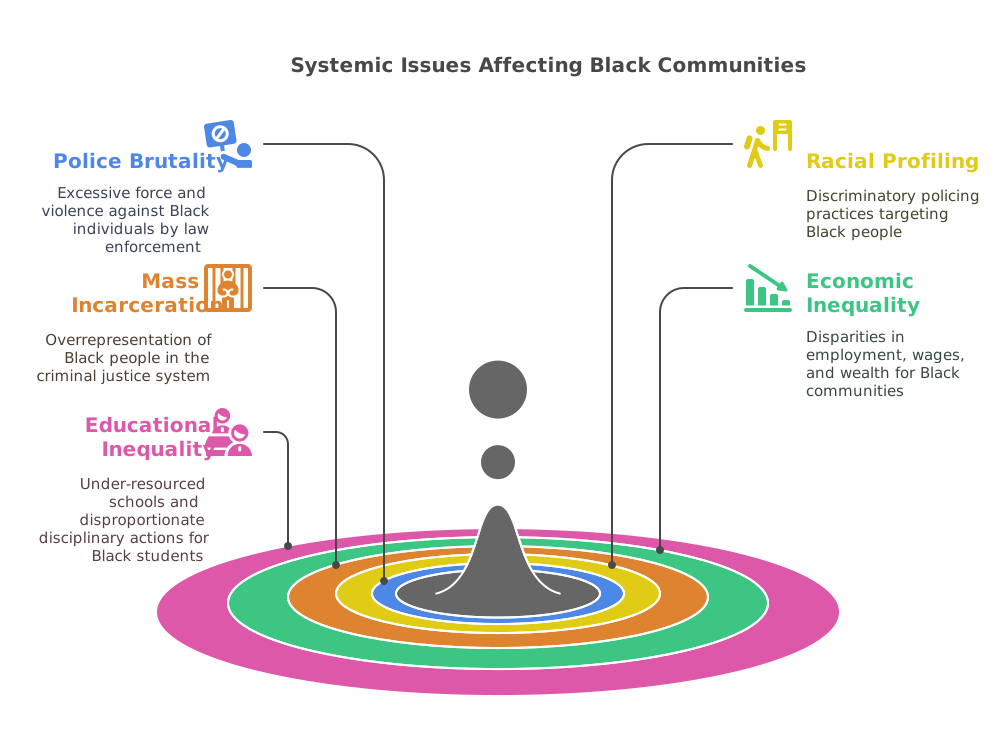
The Black Lives Matter movement directly challenges the deep-seated structures of racial inequality by drawing attention to systemic issues that have historically harmed Black communities, including:
Police brutality and the excessive use of force against Black individuals
Racial profiling and discriminatory policing practices
Mass incarceration and the overrepresentation of Black people in the criminal justice system
Economic inequality, including disparities in employment, wages, and wealth
Educational inequality, where Black students often face under-resourced schools and disproportionate disciplinary actions
Systemic Issues Affecting Black Communities
Importantly, the Black Lives Matter movement is often misunderstood or mischaracterized. It is not anti-police or anti-white—rather, it is pro-justice, pro-accountability, and pro-equality. The movement advocates for a world in which all individuals, regardless of race, can live free from violence, discrimination, and systemic barriers. By centering Black experiences, the movement aims to create a more just and inclusive society for everyone.
Key Events and Milestones
The rise and evolution of the Black Lives Matter movement have been marked by several pivotal moments that brought global attention to its message and goals. These key events helped galvanize public support and deepen the conversation about racial justice and accountability.
2014: Ferguson and New York
In 2014, the killings of Michael Brown in Ferguson, Missouri, and Eric Garner in New York City served as tragic flashpoints. Both unarmed Black men died at the hands of police officers under highly controversial circumstances. The lack of indictments in these cases sparked massive protests and civil unrest, propelling the Black Lives Matter movement into the national spotlight. Activists took to the streets to demand justice, call out police brutality, and push for systemic change.
The phrase “Hands up, don’t shoot”—attributed to Michael Brown’s final moments—and Eric Garner’s chilling last words, “I can’t breathe,” became rallying cries that echoed across the country.
2020: The Murder of George Floyd
In May 2020, the murder of George Floyd, a Black man killed by a white police officer who knelt on his neck for over nine minutes in Minneapolis, Minnesota, ignited a global resurgence of the Black Lives Matter movement. The horrifying video footage sparked outrage and empathy across racial and national lines.
What followed was one of the largest protest movements in modern history. Millions of people worldwide—across all 50 U.S. states and in over 60 countries—took to the streets to stand in solidarity with Black communities. Demonstrators demanded police reform, an end to qualified immunity, investment in community-led safety initiatives, and broader racial equity.
The Black Lives Matter movement became a unifying force for change, inspiring legislative proposals, corporate pledges, educational reform, and a cultural reckoning with systemic racism and white privilege.
Goals of the BLM Movement
The Black Lives Matter movement is driven by a bold and transformative vision of justice, equality, and liberation for Black people everywhere. Its goals go far beyond protests—they are rooted in creating lasting change by dismantling oppressive systems and building a more equitable future for all. The movement’s core objectives include:
1. Ending Police Violence and Increasing Accountability
A central goal of the Black Lives Matter movement is to end police brutality and the disproportionate use of force against Black individuals. The movement calls for comprehensive reforms in law enforcement, including the elimination of qualified immunity, the defunding of militarized policing, independent investigations into misconduct, and the reallocation of resources toward community-led safety and mental health services.
2. Dismantling White Supremacy and Systems of Oppression
The Black Lives Matter movement seeks to confront and dismantle the systemic racism embedded in political, economic, and social structures. This includes challenging white supremacy in all its forms—whether institutional, cultural, or ideological—and addressing the historical roots of inequality that continue to impact Black communities today.
3. Investing in Black Communities
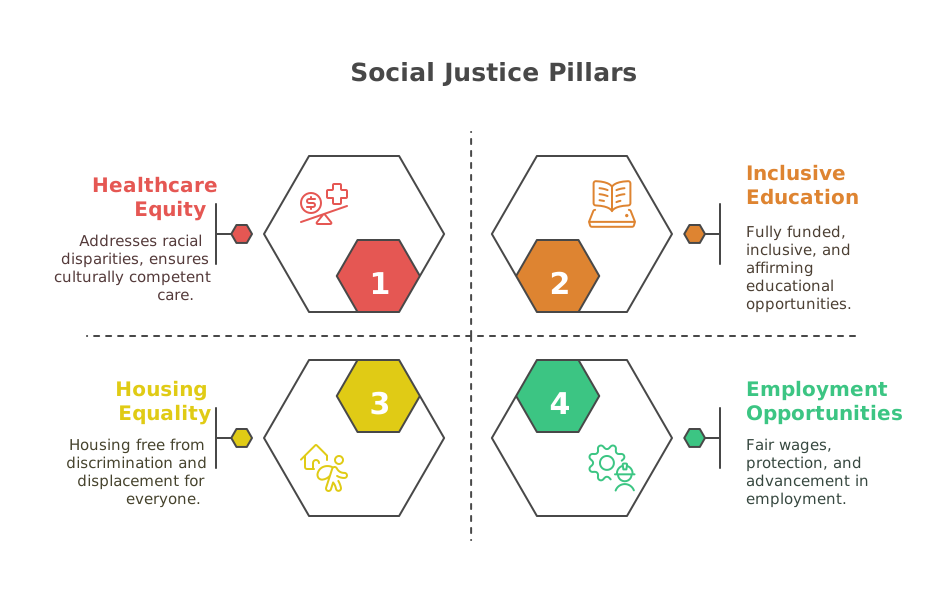
To counter centuries of disinvestment and marginalization, the movement demands intentional and sustained investment in Black neighborhoods and families. This includes equitable access to:
Healthcare that addresses racial disparities and ensures culturally competent care
Education that is fully funded, inclusive, and affirming
Housing free from discrimination and displacement
Employment opportunities that offer fair wages, protection, and advancement
Social Justice Pillars
4. Centering Marginalized Black Voices
The Black Lives Matter movement is deeply intersectional. It actively centers the voices and experiences of Black queer, transgender, disabled, undocumented, and female-identifying individuals, recognizing that the fight for Black liberation must include all members of the community. True justice means ensuring visibility, representation, and safety for those often pushed to the margins, even within Black spaces.
Common Misconceptions
As the Black Lives Matter movement has gained momentum and visibility, it has also faced misunderstanding and deliberate misrepresentation. Addressing these common misconceptions is crucial to fostering informed, meaningful dialogue and allyship.
“All Lives Matter is the Same as Black Lives Matter”
While the phrase “All Lives Matter” may sound inclusive, it misses the point of the Black Lives Matter movement. BLM does not suggest that other lives do not matter—it asserts that Black lives are disproportionately devalued in society, and that urgent action is needed to correct this. Saying “Black Lives Matter” is a call to acknowledge and address the specific harm endured by Black people. It’s about focus, not exclusion.
“The Movement Promotes Violence”
This is one of the most harmful and persistent myths. In reality, the Black Lives Matter movement is a nonviolent movement grounded in love, justice, and community. Its protests and actions are aimed at calling out systemic harm, not attacking individuals. While isolated incidents during demonstrations may draw media attention, the vast majority of BLM-led actions are peaceful, organized, and deeply rooted in principles of nonviolent resistance.
The movement holds space for grief, rage, hope, and healing, channeling collective energy into powerful demands for change—not chaos. It speaks truth to power while envisioning a more just and compassionate world.
Criticisms and Controversies
Like many large-scale social justice efforts, the Black Lives Matter movement has not been without its share of criticism and controversy. Some of these critiques have centered on the movement’s tactics, public demonstrations, or calls to defund the police, which some interpret as too radical or divisive. Others have raised questions about financial transparency, particularly at the national organizational level, pointing to the need for clearer communication and accountability regarding donations and expenditures.
However, it is vital to approach these critiques with nuance. Engaging critically with the Black Lives Matter movement—examining how it operates, how it can improve, and how it remains aligned with its mission—is not the same as dismissing the legitimacy of its cause. Advocating for racial justice and equity remains an urgent and necessary endeavor, regardless of internal challenges or differing opinions on strategy.
A key element of the movement’s structure is its decentralization. This means there is no single leader or governing body dictating actions across all chapters. Instead, local organizers adapt the movement’s core values to meet the specific needs of their communities. While this can lead to differences in focus or messaging, the foundational principles of the Black Lives Matter movement—justice, equity, and the affirmation of Black lives—remain constant throughout its network.
Legacy and Ongoing Work
The Black Lives Matter movement has had a profound and lasting impact on society. It has reshaped public conversations about race, justice, and inequality, and brought issues once marginalized into the mainstream political and cultural spotlight. What was once a grassroots campaign has grown into a global movement that influences policymaking, corporate practices, education, and media representation.
One of the most significant achievements of the Black Lives Matter movement has been its ability to mobilize millions of people across backgrounds, countries, and generations around a shared vision of justice. The movement has encouraged more people to recognize systemic racism, challenge their own biases, and engage in activism, civic participation, and solidarity work.
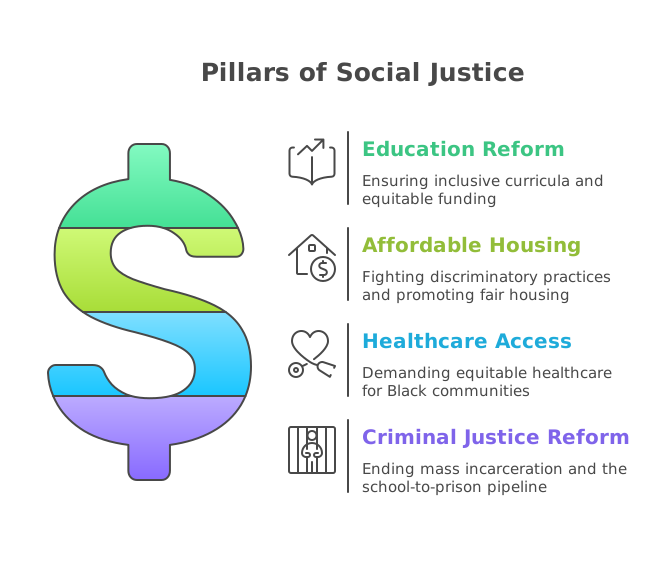
The legacy of BLM is still being written. Its ongoing work includes:
Advocating for education reform to ensure inclusive curricula and equitable funding
Fighting for affordable housing and an end to discriminatory practices like redlining
Demanding accessible and equitable healthcare that meets the needs of Black communities
Advancing legal and criminal justice reform, including the end of mass incarceration and the school-to-prison pipeline
Pillars of Social Justice
The Black Lives Matter movement is not a moment—it is a continuing mission. It is a dynamic force, open to growth, learning, and deeper commitment. As new challenges emerge and new voices rise, the movement continues to evolve, rooted in the unwavering belief that Black lives matter—yesterday, today, and always.
Conclusion
The Black Lives Matter movement stands as one of the most transformative and enduring forces for racial justice in modern history. Born from pain, ignited by injustice, and rooted in hope, it channels generations of struggle into a global call for change. More than just a response to individual acts of violence, it is a sweeping demand to dismantle systemic racism, to reimagine justice, and to build a world where Black lives are truly valued—not just in principle, but in practice.
What began as a hashtag has grown into a movement that empowers communities, influences policy, and shifts culture. Yet the work is far from over. The fight for racial equity requires sustained effort, courage, and solidarity—from individuals, institutions, and entire societies.
Everyone has a role to play. Whether through advocacy, education, organizing, voting, or challenging injustice in our daily lives, we each carry the power to help shape a more just and compassionate future. The message of the Black Lives Matter movement is not one of exclusion or division—it is a call to conscience, a demand for dignity, and an invitation to act.
Because affirming that Black lives matter isn’t just a slogan. It’s a commitment. And it must live not only in our words, but in our actions, policies, and hearts—every single day.