What Is Sex Anal? Surprising Facts Every Beginner Should Know
Curious minds often ask: what is sex anal, and is it something to consider trying? While the topic might be seen as taboo in some circles, anal sex is a common form of intimacy practiced by people of all genders and sexual orientations. If you’re curious, you’re not alone—and you’re absolutely right to seek accurate, respectful information before diving in.
Understanding What Anal Sex Really Is
Understanding What Anal Sex Really Is
The Basic Definition
Anal sex, also known as anal intercourse, involves penetration of the anus with a penis, finger, sex toy, or other object for sexual pleasure. It’s not limited to any one gender or sexual orientation and is practiced by many heterosexual, bisexual, and LGBTQ+ couples.
Is It Normal to Be Curious?
Absolutely. Curiosity is natural and healthy. As sexual wellness and education become more mainstream, more people are opening up about exploring anal play and intimacy. Whether you’re considering it yourself or just want to learn more, you’re in the right place.
Why Do People Enjoy Anal Sex?
Physical Sensitivity
The anus contains thousands of nerve endings, which can make it highly sensitive to stimulation. For some, anal sex brings unique and powerful sensations that are different from vaginal or oral sex.
Prostate Stimulation
For people with a prostate (typically individuals assigned male at birth), anal penetration can stimulate the prostate gland, sometimes referred to as the “male G-spot.” This can lead to intense, pleasurable orgasms.
Psychological Excitement
For others, the appeal of anal sex comes from the psychological aspect—whether it’s the trust involved, breaking a taboo, or the mental stimulation of trying something new and intimate.
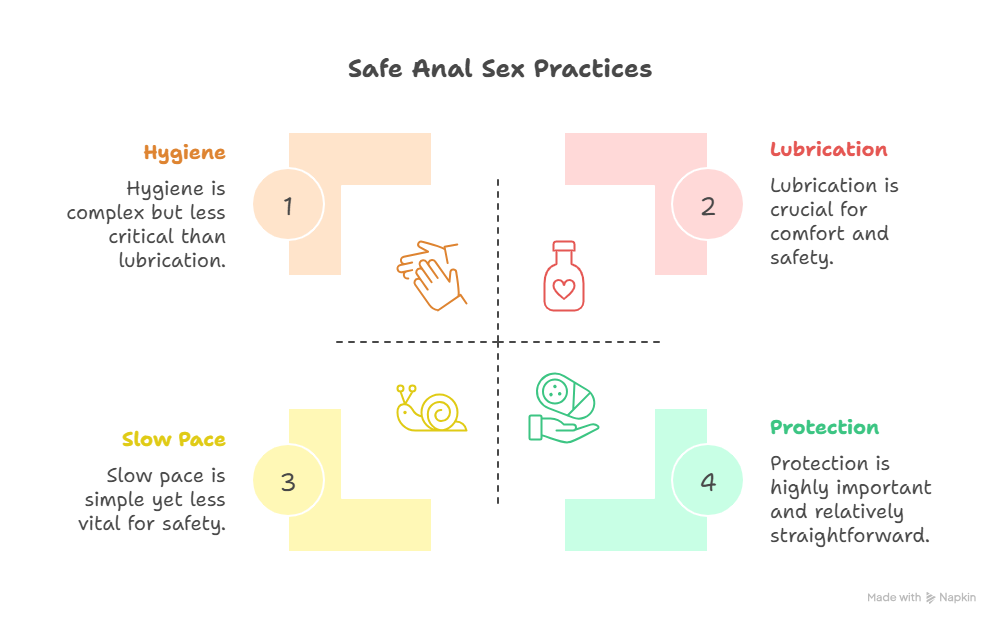
Safe Anal Sex Practices
How to Practice Anal Sex Safely
Lubrication Is Essential
Unlike the vagina, the anus does not self-lubricate. This means that using a generous amount of high-quality lubricant is not optional—it’s essential. Silicone-based lubes last longer, while water-based ones are safe with latex condoms and sex toys.
Take It Slow
The anal sphincter is a strong muscle and needs time to relax. Rushing can cause discomfort or even injury. Starting with a finger or small plug can help ease into the experience. Communication and patience are everything.
Use Protection
Condoms are a must during anal intercourse. They help prevent the spread of sexually transmitted infections (STIs), including HIV, which can transmit more easily through anal sex due to the thin rectal lining.
Hygiene Matters
While it’s not necessary to completely “clean out” with an enema, many people feel more comfortable if the rectum is empty. Gentle, warm water rinsing is sufficient. Wash hands and toys thoroughly before and after use.
Does Anal Sex Hurt?
It Shouldn’t—If Done Properly
Many people fear that anal sex is inherently painful. The truth is, pain is usually a result of going too fast, not using enough lube, or not being fully relaxed. When those factors are addressed, anal sex can be comfortable and even highly pleasurable.
Start Small
Beginners should avoid going straight to full penetration. Starting with smaller toys, fingers, or just external stimulation can help the body adapt without pain or tension.
Is Anal Sex Safe?
Yes—with the Right Precautions
Anal sex is safe for most people when the proper steps are followed. Risks such as tearing, infection, and STIs can be significantly reduced with protection, preparation, and communication.
Medical Considerations
If you experience rectal bleeding, severe discomfort, or other unusual symptoms, consult a healthcare provider. Minor discomfort is normal for beginners, but ongoing pain isn’t something to ignore.
Common Myths About Anal Sex
Common Myths About Anal Sex
“Only LGBTQ+ People Have Anal Sex”
This is false. Many heterosexual couples engage in anal play. Interest in anal sex spans all sexual orientations and identities.
“It Always Hurts”
Not true. Pain results from poor preparation, lack of lube, or going too fast. With the right technique, many people find it highly pleasurable.
“It Causes Permanent Damage”
When done gently and responsibly, anal sex does not damage the body. Trauma or complications are rare when safety steps are followed.
Emotional and Relationship Benefits
Building Trust
Trying something new in bed requires communication, vulnerability, and mutual consent. For many couples, exploring anal sex can increase emotional intimacy and strengthen trust.
Confidence and Openness
Learning about your own body and your partner’s desires can build sexual confidence. It can also lead to more open, honest conversations about needs and boundaries.
Is Anal Sex for Everyone?
No Pressure
Not everyone is interested in or comfortable with anal sex—and that’s perfectly okay. You should never feel pressured to try it, and your partner should always respect your boundaries.
Consent Is Key
All sexual activity should be consensual. If either partner is unsure, anxious, or unwilling, it’s best to wait and revisit the conversation later.
Tips for a Better First-Time Experience
Talk about it in advance—set boundaries and agree on safe words if needed.
Prepare your body—relax, breathe, and take your time.
Use lube generously—don’t be shy about reapplying.
Start small—don’t rush to full penetration right away.
Check in frequently—keep the communication open and honest.
Final Thoughts: What Is Sex Anal?
Anal sex is a safe, natural, and intimate form of sexual expression when approached with care and respect. Understanding what it is, how it works, and how to practice it safely can open the door to new levels of pleasure and trust with your partner. The key is to stay informed, communicate openly, and prioritize mutual comfort and consent every step of the way.