Your subscription could not be saved. Please try again.
Your subscription has been successful.
Gay Same Sex Relationships: The Ultimate Guide to Love and Intimacy
When it comes to gay same sex relationships, there’s a beautiful complexity that deserves to be celebrated and understood. Whether you’re exploring your identity, beginning a new relationship, or seeking to deepen an existing connection, understanding the unique aspects of gay same sex partnerships can transform your experience of love and intimacy.
Understanding Gay Same Sex Relationships in Modern Society
Gay same sex relationships have evolved significantly over the past few decades. What was once hidden in shadows now stands proudly in the light, with couples around the world living authentically and openly. These relationships encompass the full spectrum of human emotion—passion, commitment, challenges, and profound connection.
The journey of gay same sex couples often involves navigating unique circumstances that heterosexual couples may not face. From coming out to family members to finding accepting communities, the path requires courage and resilience. Yet these challenges often forge stronger bonds and a deeper understanding between partners.
Many people in gay same sex relationships report feeling a sense of freedom in defining their partnerships on their own terms. Without traditional gender roles to dictate behavior, couples can create relationships that truly reflect their individual needs and desires.
Gay Same Sex Partnerships
Building Emotional Intimacy in Gay Same Sex Partnerships
Emotional connection forms the foundation of any successful relationship, and gay same sex couples often excel at creating deep emotional bonds. The shared experience of navigating identity and societal expectations can create an immediate understanding between partners.
Communication stands as the cornerstone of emotional intimacy. Partners in gay same sex relationships benefit from open conversations about needs, boundaries, and desires. This vulnerability strengthens connections and builds trust that withstands external pressures.
Creating safe spaces for emotional expression allows both partners to show up authentically. When you can share your fears, dreams, and insecurities without judgment, the relationship deepens in meaningful ways.
Physical Intimacy and Sexual Wellness
Physical intimacy in gay same sex relationships deserves attention, respect, and celebration. Understanding your body and your partner’s body creates opportunities for incredible pleasure and connection.
Sexual health remains a critical component of physical intimacy. Regular testing, honest conversations about sexual history, and consistent use of protection demonstrate care for yourself and your partner. Many gay same sex couples find that discussing sexual health openly actually enhances intimacy rather than diminishing it.
Exploring desires together can be an exciting journey. Whether you’re discovering new experiences or deepening familiar pleasures, approaching physical intimacy with curiosity and enthusiasm keeps the spark alive in long-term relationships.
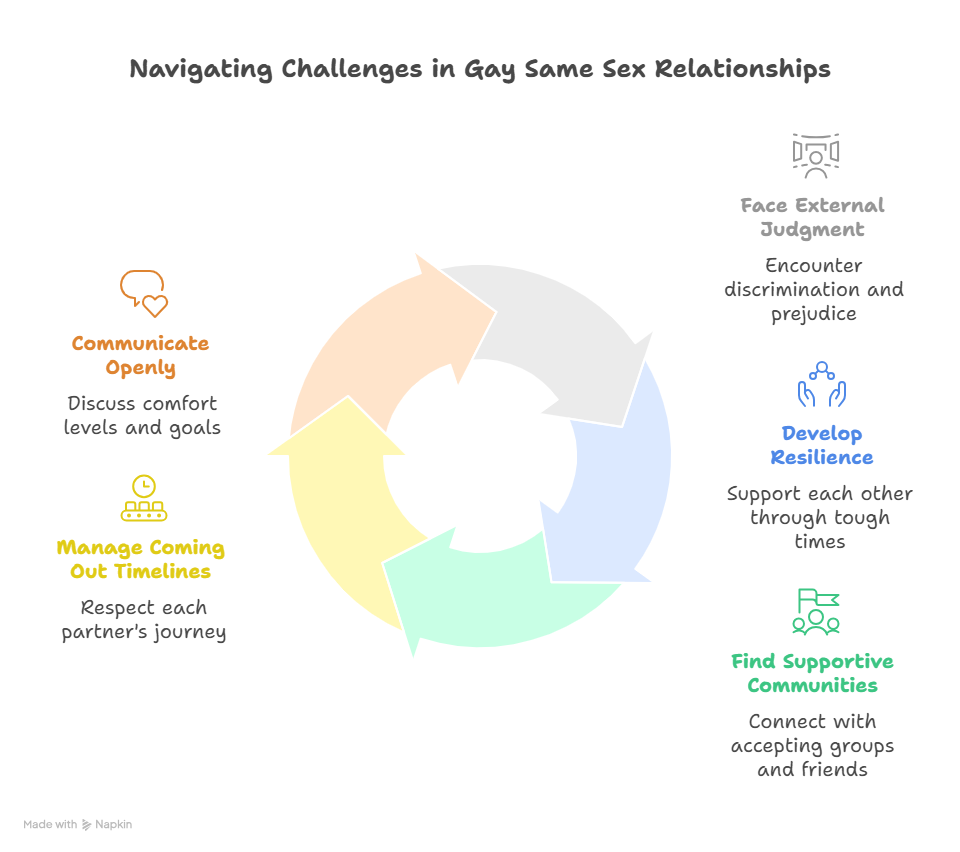
Navigating Challenges in Gay Same Sex Relationships
Navigating Challenges Unique to Gay Same Sex Couples
Every relationship faces obstacles, but gay same sex partnerships sometimes encounter specific challenges that require particular attention and strategies.
Dealing with External Judgment
Unfortunately, not everyone supports gay same sex relationships. Partners may face discrimination, judgment from family members, or societal prejudice. Developing resilience as a couple means supporting each other through these difficult moments and creating a united front against negativity.
Finding supportive communities becomes essential. Whether through LGBTQ+ organizations, online groups, or circles of accepting friends, surrounding yourselves with people who celebrate your love provides crucial support.
Managing Different Coming Out Timelines
In gay same sex relationships, partners may be at different stages of their coming-out journey. One person might be fully open about their identity while the other remains closeted to certain people or in specific contexts. This difference requires patience, understanding, and ongoing communication.
Respecting each partner’s timeline while also addressing the relationship’s needs creates a delicate balance. Honest conversations about comfort levels and future goals help navigate these potentially difficult situations.
Creating Lasting Commitment
Long-term gay same sex relationships thrive when partners invest in their connection consistently. Commitment means choosing your partner repeatedly, even when challenges arise.
Building a Shared Future
Planning for the future together strengthens the bond between partners. Whether discussing living arrangements, financial goals, or dreams of starting a family, these conversations demonstrate investment in the relationship’s longevity.
Many gay same sex couples face additional legal considerations around marriage, adoption, and inheritance. Staying informed about rights and protections in your location ensures you can build the secure future you deserve.
Maintaining Individual Identity
While creating a strong partnership, maintaining your individual identity remains important. Gay same sex relationships flourish when each person continues pursuing personal interests, friendships, and growth outside the relationship.
Encouraging your partner’s independence actually strengthens your connection. When both people feel fulfilled as individuals, they bring more energy and positivity to the relationship.
The Role of Community in Gay
The Role of Community in Gay Same Sex Relationships
Community connection provides invaluable support for gay same sex couples. Finding spaces where you can exist as yourselves without explanation or justification nourishes your relationship and individual well-being.
LGBTQ+ spaces offer opportunities to connect with others who share similar experiences. These connections provide friendship, mentorship, and a sense of belonging that enriches your life beyond your romantic relationship.
Participating in community events, advocacy, or social groups also allows gay same sex couples to contribute to creating the accepting world they want to see. This shared purpose can deepen your connection as a couple while making a positive impact.
Overcoming Internalized Stigma
Many people in gay same sex relationships struggle with internalized homophobia or shame, even after coming out. These feelings can subtly undermine relationship satisfaction and personal happiness.
Addressing internalized stigma often requires intentional work. Therapy, particularly with LGBTQ+-affirming professionals, can provide tools for unpacking harmful beliefs and replacing them with self-acceptance and pride.
Supporting your partner through their own journey with internalized stigma demonstrates love and commitment. Patience and understanding go far in creating space for healing and growth.
Celebrating Your Love
Gay same sex relationships deserve celebration. From small daily affirmations to major milestones, acknowledging and honoring your love creates positive momentum in your partnership.
Creating rituals and traditions unique to your relationship builds a shared history. Whether it’s weekly date nights, annual trips, or simple morning routines, these repeated experiences strengthen your bond.
Don’t hesitate to celebrate publicly when you feel safe doing so. Visibility matters, both for your own sense of pride and for younger LGBTQ+ people who need to see examples of healthy, happy gay same sex relationships.
Growing Together Over Time
Successful long-term gay same sex relationships require ongoing effort and adaptation. As individuals change and grow, relationships must evolve to accommodate new needs and circumstances.
Regular relationship check-ins provide opportunities to discuss what’s working and what needs adjustment. These conversations prevent small issues from becoming major problems and demonstrate ongoing investment in the partnership.
Approaching your relationship with curiosity rather than complacency keeps things fresh. Continuing to learn about your partner, even after years together, reveals new depths and strengthens your connection.
Finding Resources and Support
Numerous resources exist specifically for people in gay same sex relationships. From books and podcasts to therapists and support groups, accessing these resources demonstrates commitment to relationship health.
Online communities provide connection opportunities for those in areas with limited LGBTQ+ resources. These digital spaces allow for sharing experiences, seeking advice, and finding solidarity with others in similar situations.
Professional support, whether from therapists, counselors, or relationship coaches, can provide valuable tools and perspectives. Seeking help isn’t a sign of weakness but rather a demonstration of commitment to making your relationship thrive.