Your subscription could not be saved. Please try again.
Your subscription has been successful.
Powerful Insights Into Causes, Symptoms, and Treatment
Sexual dysfunction is more common than many people realize, yet it remains one of the least talked about health topics. Difficulties with desire, arousal, satisfaction, or sexual function can affect people of all genders and ages. Experiencing these challenges does not mean something is “wrong” with you—it means there may be physical, emotional, relationship, or lifestyle factors worth understanding.
The good news is that sexual dysfunction is often manageable and, in many cases, treatable. Understanding the causes and available solutions is the first step toward improving sexual well-being and quality of life.
Sexual dysfunction refers to ongoing difficulties during any stage of sexual activity that cause distress or affect satisfaction. These challenges may involve desire, arousal, physical response, orgasm, or discomfort.
Occasional sexual difficulties are normal. Sexual dysfunction usually refers to concerns that happen repeatedly and interfere with daily life or relationships.
Who Can Experience It?
Who Can Experience It?
Sexual dysfunction can affect:
Men
Women
People of all sexual orientations
Young adults and older adults
Sexual health is influenced by many different aspects of life, making this a widespread experience.
Types of Sexual Dysfunction
Desire Disorders
This involves reduced or absent interest in sexual activity. Changes in libido can happen due to stress, hormones, emotional factors, or health conditions.
Arousal Disorders
A person may want intimacy but have difficulty becoming physically aroused or maintaining arousal.
This includes delayed orgasm, difficulty reaching orgasm, or changes in orgasm intensity.
Pain-Related Sexual Difficulties
Some people experience discomfort or pain during sexual activity, which can affect confidence and satisfaction.
Common Causes of Sexual Dysfunction
Physical Causes
Physical factors may include:
Hormonal changes
Chronic illness
Medication side effects
Fatigue
Cardiovascular issues
Because sexual response involves multiple body systems, physical health often plays a major role.
Psychological Causes
Emotions strongly influence sexual experiences.
Contributing factors may include:
Stress
Anxiety
Depression
Performance pressure
Low self-esteem
Relationship Factors
Relationship dynamics can affect sexual function, including:
Poor communication
Conflict
Lack of trust
Emotional distance
Sexual Dysfunction in Men
Common Concerns
Men may experience issues such as:
Erectile difficulties
Changes in libido
Difficulty with orgasm
Ejaculation concerns
Performance Pressure
Many men feel pressure around expectations of performance, which can increase stress and worsen symptoms.
Sexual Dysfunction in Women
Sexual Dysfunction in Women
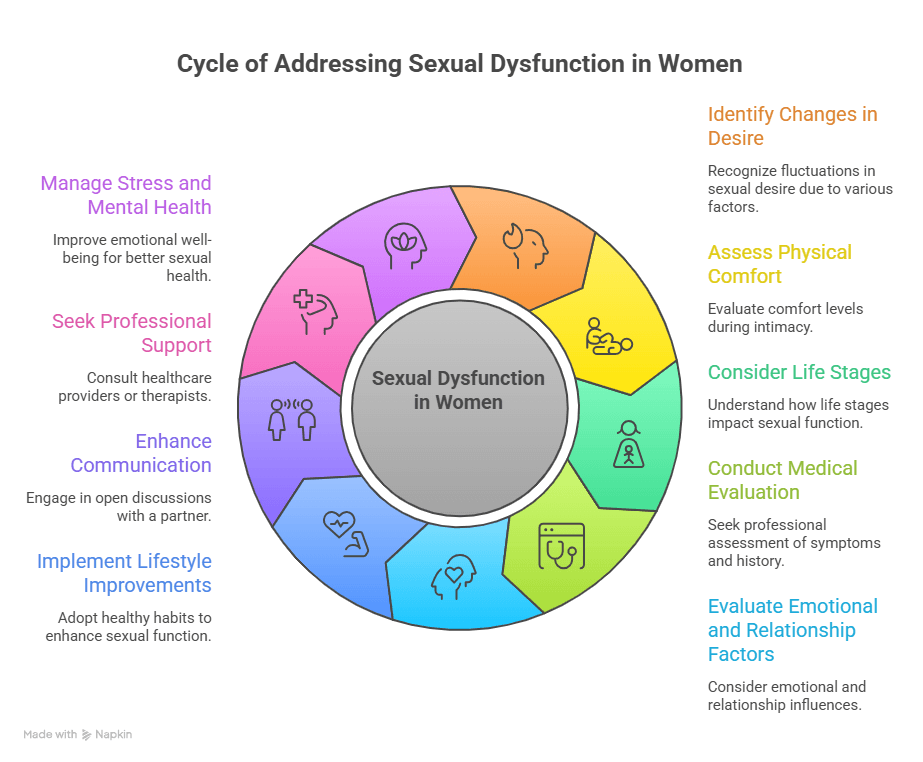
Changes in Desire
Women may experience fluctuations in desire due to hormones, life changes, or emotional factors.
Physical Comfort
Comfort during intimacy can influence satisfaction and overall sexual experience.
Life Stages Matter
Pregnancy, postpartum recovery, and aging may affect sexual function differently over time.
How Sexual Dysfunction Is Diagnosed
Medical Evaluation
A healthcare professional may ask questions about symptoms, medical history, medications, and lifestyle habits.
Looking Beyond Physical Health
Emotional and relationship factors are often considered alongside physical health when evaluating sexual dysfunction.
Cycle of Addressing Sexual Dysfunction in Women
Treatment Options for Sexual Dysfunction
Lifestyle Improvements
Healthy habits can positively affect sexual function:
Regular exercise
Balanced nutrition
Better sleep
Stress reduction
Communication With a Partner
Open discussions about needs, comfort, and expectations can improve intimacy and reduce pressure.
Professional Support
Healthcare providers, therapists, or counselors may recommend personalized treatment approaches depending on the underlying cause.
Managing Stress and Mental Health
Improving emotional well-being often improves sexual well-being too.
Common Myths About Sexual Dysfunction
“It Only Happens to Older People”
Sexual dysfunction can happen at any age.
“It Means Your Relationship Is Bad”
Sexual difficulties do not automatically mean a relationship is unhealthy.
“You Should Fix It Alone”
Seeking support is normal and often leads to better outcomes.
How to Support a Partner Experiencing Sexual Dysfunction
Avoid Blame
Approach the situation with understanding rather than criticism.
Encourage Open Conversations
Creating emotional safety often reduces pressure and improves connection.
Be Patient
Progress may take time. Support and communication can make a significant difference.
Final Thoughts
Sexual dysfunction is a health concern—not a personal failure. It can affect anyone and may result from physical, emotional, or relationship factors. Understanding the causes and exploring healthy solutions can improve confidence, intimacy, and overall quality of life.
If symptoms persist or cause distress, reaching out to a qualified healthcare professional can be an important and positive next step.