Your subscription could not be saved. Please try again.
Your subscription has been successful.
Is Anal Intercourse Safe? Powerful Truths Every Couple Should Know
Is anal intercourse safe? This is a question asked by people of all genders, sexual orientations, and relationship types. As society becomes more open to discussing intimate topics, it’s essential to separate facts from fear. When approached with care, knowledge, and mutual respect, anal intercourse can be a safe and enjoyable part of a healthy sex life.
Anal intercourse refers to penetration of the anus, typically with a penis, fingers, or sex toys. While often associated with same-sex male relationships, it’s practiced by many heterosexual couples and individuals of various sexual orientations. For some, it’s a pleasurable act; for others, it’s an area of curiosity or concern.
Why Safety Concerns Exist
The anus is not designed for penetration the same way the vagina is. It has fewer natural protections and no self-lubrication. That’s why it’s essential to take safety seriously—without sacrificing enjoyment.
Is Anal Intercourse Safe Physically?
Is Anal Intercourse Safe Physically?
Delicate Tissue and Injury Risk
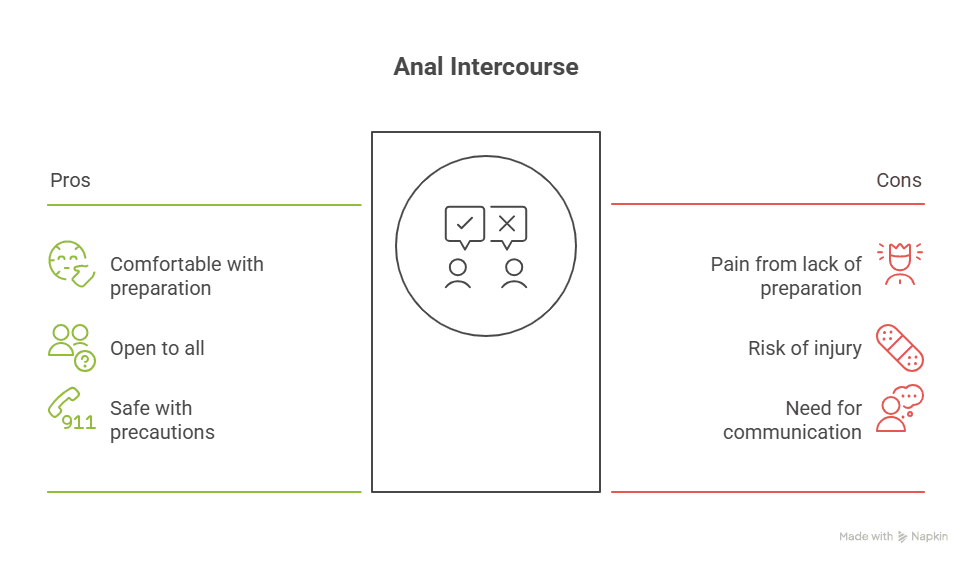
The rectal lining is thinner and more delicate than vaginal tissue. Without sufficient preparation, anal sex can lead to small tears, known as microtears, which can cause bleeding and increase the risk of infections.
STI Transmission Risk
Anal intercourse carries a higher risk of transmitting sexually transmitted infections (STIs), especially HIV. The reason? The rectal lining is highly absorbent and more likely to tear, giving viruses easier access to the bloodstream. This makes condom use and regular testing extremely important.
Can It Cause Long-Term Damage?
There are concerns about whether frequent anal sex might weaken the anal sphincter over time. In rare cases—especially when it’s rough, frequent, or lacks preparation—this could contribute to decreased muscle tone or even fecal incontinence. However, when practiced gently, with proper technique, these outcomes are uncommon.
Making Anal Intercourse Safe and Pleasurable
Use High-Quality Lubrication
The anus does not produce natural lubrication. Always use generous amounts of water-based or silicone-based lube. Silicone tends to last longer, which is helpful for extended sessions.
Go Slowly and Listen to the Body
Patience is crucial. Begin with smaller objects or fingers, and let the muscles gradually relax. Never force entry, and always pay attention to any discomfort or pain.
Condoms Are Non-Negotiable
Condoms are a must for anal intercourse—not only to reduce the risk of STIs but also to protect against bacteria. Never switch from anal to vaginal sex without changing condoms, as this can introduce harmful bacteria into the vaginal canal.
Hygiene Is Key
Consider using a gentle enema or anal rinse before sex, but don’t overdo it—too much cleaning can irritate the lining. Afterward, wash gently with warm water and mild soap.
Is Anal Intercourse Safe for Women?
Is Anal Intercourse Safe for Women?
Common Concerns Among Women
Many women are curious but hesitant due to fears of pain, messiness, or long-term harm. The reality is that anal sex can be perfectly safe and pleasurable for women with the same care, communication, and preparation as anyone else.
Does It Affect Fertility?
No. Anal intercourse does not impact a woman’s fertility. However, in extremely rare cases, semen could potentially migrate from the anus to the vagina, so use protection if pregnancy is a concern.
Psychological and Emotional Safety
Consent Is Everything
Anal sex should never be the result of pressure, guilt, or coercion. It should be a choice made freely and enthusiastically by both partners. If someone isn’t sure, wait. Exploring boundaries should be empowering—not stressful.
Build Trust Through Communication
Talking openly about expectations, fears, boundaries, and desires can make the experience safer and more pleasurable. It also strengthens emotional connection and intimacy.
Is Anal Intercourse Safe Long-Term?
When Practiced Responsibly
There is no evidence that moderate, consensual anal sex causes harm long-term. People who take the proper precautions—lube, condoms, hygiene, and communication—are unlikely to experience serious negative effects.
Signs You Should See a Doctor
If you experience ongoing pain, bleeding, or changes in bowel habits after anal sex, consult a healthcare provider. It’s always better to be cautious and informed.
Anal Intercourse
Common Myths About Anal Intercourse
“It Always Hurts”
This is false. Pain usually comes from lack of preparation, tension, or rushing. With patience, lube, and relaxation, it can be comfortable and enjoyable.
“It’s Only for Certain People”
Anal sex is not exclusive to any one group or identity. People of all orientations and genders engage in it—and enjoy it—for their own reasons.
“It’s Unsafe No Matter What”
Like any sexual activity, anal sex has risks—but those risks are manageable with the right precautions. It can be just as safe as vaginal sex when done right.
Tips for First-Time Anal Intercourse
Start small—fingers or slim toys are ideal to begin with.
Use lots of lube and go slow.
Focus on communication and relaxation.
Take breaks when needed.
Clean up gently and offer aftercare to both partners.
Final Thoughts: Is Anal Intercourse Safe?
Yes—anal intercourse is safe when approached with care, respect, and responsibility. Understanding your body, communicating openly, and prioritizing safety make the experience not only risk-free but deeply rewarding. Whether it becomes a regular part of your sex life or remains something you try once, the key is informed, empowered choice.