Your subscription could not be saved. Please try again.
Your subscription has been successful.
BIPOC: Understanding Its Meaning, Identity & Importance
The term BIPOC has become increasingly prominent in discussions around race, identity, and social justice, but what does it truly mean—and why does it matter?
An acronym for Black, Indigenous, and People of Color, BIPOC is used to highlight the unique experiences of marginalized racial and ethnic communities, particularly those most affected by systemic racism and colonialism. It emphasizes the need to recognize both shared struggles and distinct histories within communities of color.
In today’s cultural landscape, language matters. The term BIPOC is more than a label—it’s a reflection of identity, visibility, and the ongoing fight for equity.
This article breaks down the meaning, origins, and significance of BIPOC, why it’s important in anti-racism conversations, and how it encourages more nuanced, inclusive dialogue about race and representation.
BIPOC stands for Black, Indigenous, and People of Color. It’s a term created to foster a more intentional and inclusive approach to conversations about race, identity, and structural inequality.
Why Not Just “People of Color”?
While the phrase “people of color” groups together non-white communities, it often flattens the diverse experiences of those within it. BIPOC was introduced to specifically:
Center the unique struggles of Black and Indigenous people, whose histories are marked by slavery, colonization, and systemic erasure
Acknowledge that not all racialized groups experience racism in the same way
Push for more accurate, nuanced discussions in activism, policy, and cultural work
An Evolving, Conscious Term
Using BIPOC is about recognizing layered identities and challenging blanket terms that may overlook historical context and ongoing disparities. It invites deeper attention to the specific needs, voices, and contributions of Black and Indigenous individuals within broader communities of color.
While language will continue to evolve, BIPOC serves as a tool for amplifying justice, representation, and understanding.
Why Was the Term BIPOC Created?
The term BIPOC emerged as a response to the limitations of the phrase “people of color”, which, while useful in uniting non-white communities, often glosses over the specific histories and oppressions faced by different racial groups.
Centering Black and Indigenous Voices
Black and Indigenous people have historically endured some of the deepest, most entrenched forms of systemic oppression:
Slavery, segregation, and anti-Black racism continue to shape the lives of Black communities.
Colonization, cultural genocide, and land theft still affect Indigenous populations today.
The term BIPOC was created to center these two groups—not to divide, but to highlight their unique experiences and ensure they are not erased or diluted in conversations about racial equity.
By naming Black and Indigenous communities specifically, the acronym brings greater nuance and clarity to racial justice work.
Breaking Down the Identities Within BIPOC
Understanding BIPOC means recognizing that it’s not a monolith. Each part of the acronym represents distinct histories, identities, and struggles within the broader fight for racial justice.
Black
Refers to people of African descent, including African Americans, Afro-Caribbeans, Afro-Latinx individuals, and more. Black communities face:
The enduring legacies of slavery and segregation
Ongoing anti-Black racism in policing, healthcare, housing, and education
Systemic barriers that reinforce racial inequality and exclusion
Indigenous
Includes Native peoples from North America and around the world, such as Native American, First Nations, Inuit, and Métis communities. Indigenous people experience:
Colonial violence and displacement from ancestral lands
Cultural erasure and assimilation policies
Ongoing challenges in sovereignty, healthcare, and representation
People of Color
A broad, inclusive term encompassing:
Latinx and Hispanic communities
Asian and South Asian populations
Middle Eastern, Pacific Islander, and multiracial individuals
While these groups face their own forms of racism, xenophobia, and stereotyping, their experiences can differ significantly in intensity, visibility, and history compared to Black and Indigenous communities.
Recognizing this complexity is essential to using BIPOC respectfully and meaningfully.
The Importance of Centering Black and Indigenous Voices
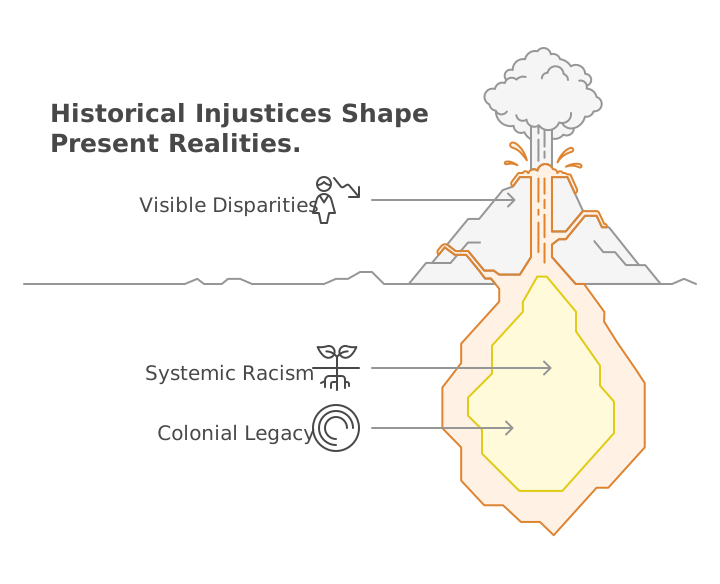
At the heart of the term BIPOC is the commitment to center the voices, histories, and struggles of Black and Indigenous communities. These groups have faced—and continue to face—some of the most severe and long-standing forms of systemic oppression.
Disproportionate Impact and Historical Injustice
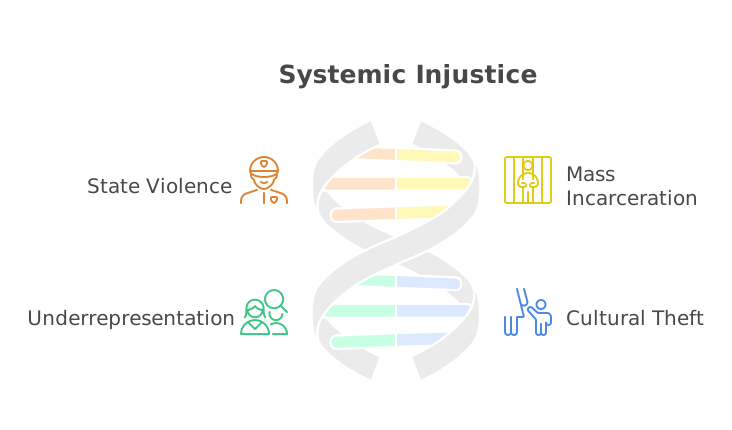
Black and Indigenous people have endured:
State violence and over-policing
Mass incarceration and land dispossession
Underrepresentation in media, politics, healthcare, and education
Generations of exploitation, erasure, and cultural theft
Recognizing their unique experiences is not about excluding others—it’s about ensuring that justice efforts address the roots of inequality, not just the symptoms.
A Call for Nuance
Generalizing the experiences of all non-white people under one umbrella term can be harmful. BIPOC encourages deeper conversations about the specific ways racism manifests across different communities, leading to more intentional, effective, and equitable solutions.
BIPOC vs. People of Color: What’s the Difference?
While both terms aim to unify and uplift non-white communities, there are important distinctions between BIPOC and people of color (POC)—especially when it comes to visibility and impact.
People of Color: Broad but Vague
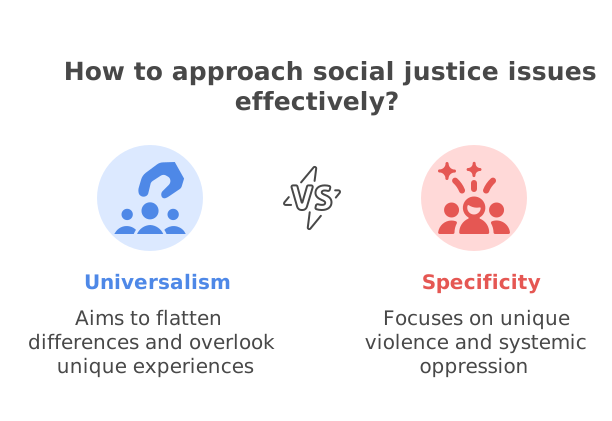
The term people of color is valuable in collective resistance and solidarity, but it can:
Flatten the differences between groups with vastly different histories
Overlook the unique violence and systemic oppression faced by specific communities
Contribute to the erasure of Black and Indigenous leadership and experiences
BIPOC: Specific and Intentional
BIPOC emerged as a more inclusive and precise alternative. It highlights that:
Not all racialized experiences are the same
Black and Indigenous people deserve focused attention and policy action
Anti-racism must be rooted in the historical and structural realities of those most harmed
In short, BIPOC acknowledges that equality begins with recognizing difference—not erasing it.
Intersectionality Within BIPOC Communities
Understanding BIPOC identities requires more than racial awareness—it demands an intersectional lens. Coined by legal scholar Kimberlé Crenshaw, intersectionality examines how multiple aspects of identity—like race, gender, class, sexuality, and ability—interact to shape lived experiences.
Complex and Layered Realities
No two BIPOC individuals experience oppression in the same way. For example:
A queer Black woman may face racism, homophobia, and sexism simultaneously.
A disabled Indigenous person might navigate systemic neglect in both healthcare and accessibility.
An undocumented Latinx immigrant could experience xenophobia on top of class-based barriers.
These overlapping forms of discrimination aren’t additive—they compound and intersect, often intensifying marginalization and reducing access to justice or care.
Recognizing intersectionality within BIPOC communities ensures that solutions are inclusive, not one-dimensional—because liberation must reach the most marginalized first.
Criticism and Evolving Language
Like all cultural terms, BIPOC isn’t without its critiques. While it aims to center historically excluded voices, some argue that the term can become confusing, misused, or tokenistic if not applied with care.
Misuse and Overgeneralization
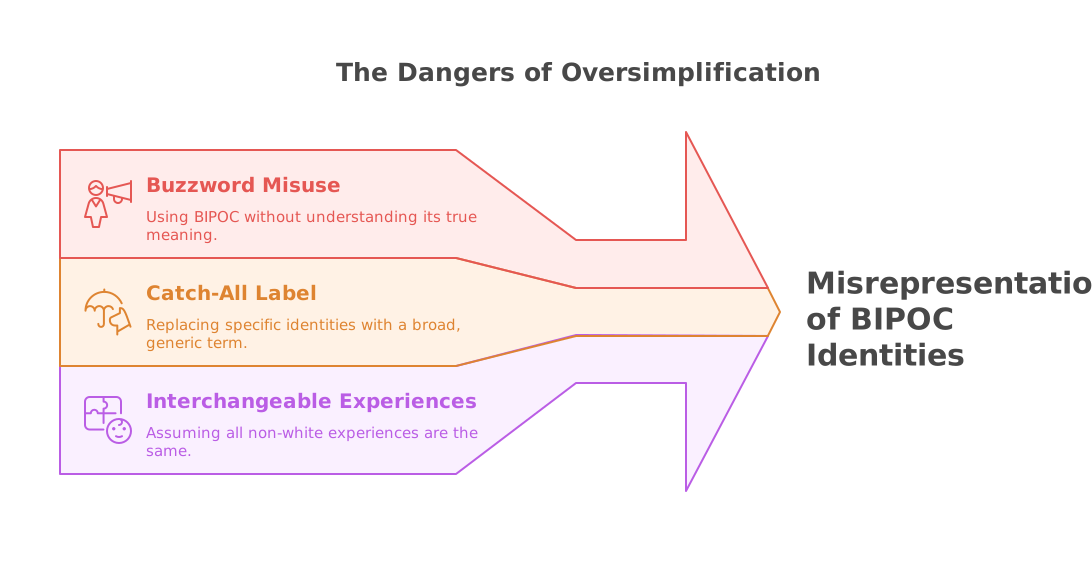
Common concerns include:
Using BIPOC as a buzzword without understanding its meaning or purpose
Treating it as a catch-all label that replaces more specific identities
Assuming all non-white experiences are interchangeable
When that happens, the term loses its clarity and impact.
Language Is Always Evolving
It’s important to remember that no single term can perfectly capture the richness and diversity of human identity. As with any language around race or identity:
Use BIPOC intentionally and respectfully, not casually
Listen to how individuals identify themselves
Be open to learning, unlearning, and evolving your language as conversations shift
Ultimately, BIPOC is one tool among many—it’s not the final word, but part of a larger movement toward equity, visibility, and justice.
Why Representation and Visibility Matter
BIPOC communities have long faced underrepresentation or misrepresentation across nearly every sphere of society—from media and politics to education and healthcare.
The Cost of Erasure
When BIPOC stories, leaders, and voices are absent:
Stereotypes and misconceptions go unchallenged
Communities are left feeling invisible, unheard, or tokenized
Systemic inequities are allowed to persist without scrutiny
Why Representation Is Powerful
Authentic representation helps to:
Affirm identity and validate lived experiences
Inspire empowerment in younger generations
Break down harmful narratives and create new cultural norms
Ensure that policies, education, and leadership reflect real diversity
When BIPOC individuals see themselves in positions of power, creativity, and influence, it reshapes what’s possible—for individuals and for society as a whole.
How to Support BIPOC Individuals and Communities
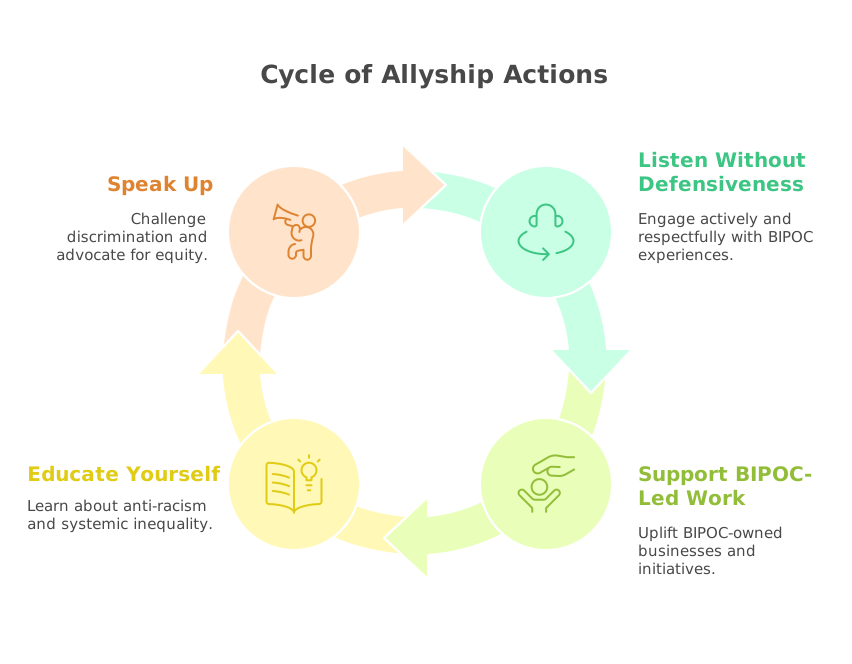
Supporting BIPOC communities goes far beyond hashtags or performative allyship—it requires consistent, conscious action rooted in empathy, equity, and accountability.
1. Listen Without Defensiveness
When BIPOC individuals share their experiences:
Believe them.
Don’t interrupt or minimize.
Avoid centering your own feelings or discomfort.
Listening is an act of respect and solidarity.
2. Support BIPOC-Led Work
Uplift:
BIPOC-owned businesses and creators
Nonprofits and mutual aid networks led by and for communities of color
Books, films, and media by BIPOC voices
Economic support is a form of resistance and empowerment.
3. Educate Yourself
There’s an abundance of books, podcasts, articles, and courses on anti-racism, systemic inequality, and intersectionality. Take the initiative to self-educate, rather than expecting BIPOC individuals to provide emotional labor for free.
4. Speak Up
Racism doesn’t just live in headlines—it happens in boardrooms, schools, social circles, and family dinners. Use your voice to:
Challenge microaggressions and discrimination
Advocate for equity and inclusion in your workplace or community
Take the pressure off BIPOC individuals to always be the ones speaking out
True allyship means choosing discomfort over silence—and using your privilege to help shift the culture.
Conclusion
BIPOC is more than just an acronym—it’s a powerful reminder of the need to recognize, respect, and uplift the lived experiences of Black, Indigenous, and People of Color. It encourages us to move beyond generalized conversations about race and toward a more nuanced, inclusive, and action-driven approach to justice.
By understanding the meaning and origins of BIPOC, embracing intersectionality, and committing to equity in representation and advocacy, we take a step closer to true inclusion. But awareness alone isn’t enough—real change requires action.
Support BIPOC voices. Challenge oppressive systems. Listen, learn, and stay accountable. Because equity isn’t just an idea—it’s a practice.