Your subscription could not be saved. Please try again.
Your subscription has been successful.
Condom: Powerful Protection for Safe and Confident Sex
A condom is one of the most effective, affordable, and widely available methods of protection during sexual activity. Whether you’re looking to prevent pregnancy, protect against sexually transmitted infections (STIs), or simply feel more confident during intimacy, understanding how to use a condom correctly is essential.
Despite being simple to use, many people still have questions about condoms—how they work, how effective they are, and how to choose the right one. This guide will walk you through everything you need to know about condoms in a clear and practical way.
A condom is a thin barrier, typically made of latex, polyurethane, or polyisoprene, worn during sexual activity to prevent direct contact between bodily fluids.
There are two main types of condoms:
External condoms (commonly known as male condoms)
Internal condoms (also known as female condoms)
How a Condom Works
A condom works by creating a physical barrier that prevents sperm from entering the body and reduces the risk of transmitting infections during vaginal, anal, or oral sex.
Why Using a Condom Is Important
Protection Against Pregnancy
When used correctly, a condom is highly effective at preventing pregnancy. It stops sperm from reaching the egg, making fertilization impossible.
Protection Against STIs
One of the biggest advantages of using a condom is protection against sexually transmitted infections, including HIV, chlamydia, gonorrhea, and more.
Peace of Mind
Using a condom allows both partners to feel safer and more relaxed, which can improve overall sexual experience.
The most common type, known for being effective and affordable. However, they are not suitable for people with latex allergies.
Non-Latex Condoms
Made from materials like polyurethane or polyisoprene, these are ideal for those with sensitivities to latex.
Textured Condoms
Designed with ribs or dots to increase stimulation and enhance pleasure for both partners.
Flavored Condoms
Often used for oral sex, these come in various flavors to improve the experience.
Ultra-Thin Condoms
These are designed to provide a more natural feeling while still offering protection.
How to Use a Condom Correctly
Step-by-Step Guide
Check the expiration date on the condom package.
Open the package carefully to avoid tearing.
Pinch the tip of the condom to remove air.
Roll the condom onto the erect penis before any contact.
After ejaculation, hold the base while withdrawing.
Dispose of the condom properly in a bin.
Common Mistakes to Avoid
Using a condom that is expired
Putting it on inside out and flipping it
Not leaving space at the tip
Using oil-based lubricants with latex condoms
How Effective Is a Condom?
How Effective Is a Condom?
Typical vs. Perfect Use
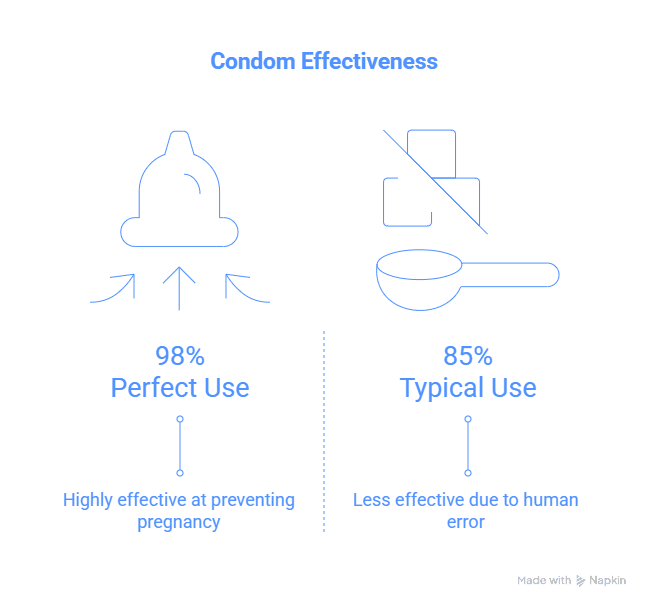
With perfect use, condoms are about 98% effective at preventing pregnancy. With typical use, effectiveness is around 85% due to human error.
Consistency and proper use significantly increase effectiveness.
STI Protection
Condoms are highly effective at reducing the risk of most STIs, especially those transmitted through bodily fluids.
Choosing the Right Condom
Size Matters
Choosing the correct size ensures comfort and effectiveness. A condom that is too tight may break, while one that is too loose may slip off.
Material Preference
If you have allergies or sensitivities, choosing a non-latex option is important.
Additional Features
Some condoms include lubrication, warming sensations, or textures to enhance pleasure.
Condoms and Lubrication
Why Lubrication Matters
Lubrication reduces friction, which lowers the risk of condom breakage and improves comfort.
Types of Lubricants
Water-based: Safe for all condoms
Silicone-based: Long-lasting and safe with latex
Oil-based: Not safe with latex condoms
Myths About Condoms
“Condoms Reduce Pleasure”
Modern condoms are designed to be thin and comfortable. Many people find that the added sense of security actually improves enjoyment.
“You Don’t Need a Condom in a Trusted Relationship”
Unless both partners have been tested and are monogamous, using a condom is still important for protection.
“One Condom Is Enough for Multiple Uses”
A condom should never be reused. Always use a new condom for each act.
Condom Effectiveness
When Should You Use a Condom?
Every Time
A condom should be used during every sexual encounter, including vaginal, anal, and oral sex, to ensure maximum protection.
Before Any Contact
It should be applied before any genital contact to prevent exposure to fluids.
Final Thoughts
A condom is one of the simplest yet most powerful tools for maintaining sexual health. It provides protection, confidence, and peace of mind while allowing people to enjoy intimacy responsibly.
By understanding how to choose and use a condom correctly, you can significantly reduce risks and create a safer, more enjoyable sexual experience for both partners.