Your subscription could not be saved. Please try again.
Your subscription has been successful.
What Is Sexual Intercourse? The Clear and Essential Guide Explained
The question “what is sexual intercourse” is one of the most commonly searched topics in sexual education. Whether you’re learning for the first time or looking for a clearer understanding, knowing what sexual intercourse means is important for making informed and responsible decisions.
This guide explains what sexual intercourse is, how it works, why it matters, and what you should know about safety, consent, and health.
Sexual intercourse typically refers to the act of penetration, most commonly when a penis enters a vagina. This form is often associated with reproduction, as it can lead to pregnancy when sperm fertilizes an egg.
However, the term can sometimes be used more broadly to describe other types of penetrative sexual activity, depending on context.
Purpose of Sexual Intercourse
Purpose of Sexual Intercourse
Sexual intercourse can serve different purposes, including:
Reproduction
Pleasure
Emotional connection between partners
For many people, it is an important part of intimate relationships.
How Sexual Intercourse Works
Physical Process
During sexual intercourse, physical stimulation leads to arousal. In male bodies, this typically results in an erection. In female bodies, it often includes natural lubrication and increased sensitivity.
When ejaculation occurs, sperm may enter the vagina, which can potentially lead to pregnancy if it reaches an egg.
Emotional and Psychological Aspects
Sexual intercourse is not only physical. Emotional connection, trust, and comfort play a major role in the experience for many individuals.
Types of Sexual Intercourse
Vaginal Intercourse
This is the most commonly referenced type, involving penetration of the vagina.
While not always classified as intercourse, oral sex involves stimulation of the genitals using the mouth and is often discussed alongside sexual activity.
Consent in Sexual Intercourse
What Consent Means
Consent is a clear, voluntary agreement between participants. It must be given freely and can be withdrawn at any time.
Key Elements of Consent
Freely given
Clear and enthusiastic
Ongoing throughout the activity
Without consent, sexual activity is not lawful or ethical.
Safety and Protection
Preventing Pregnancy
Contraception methods such as condoms, birth control pills, and other options help prevent unintended pregnancy.
Preventing STIs
Using protection, especially condoms, reduces the risk of sexually transmitted infections.
Regular Health Checkups
Routine testing and medical checkups are important for maintaining sexual health.
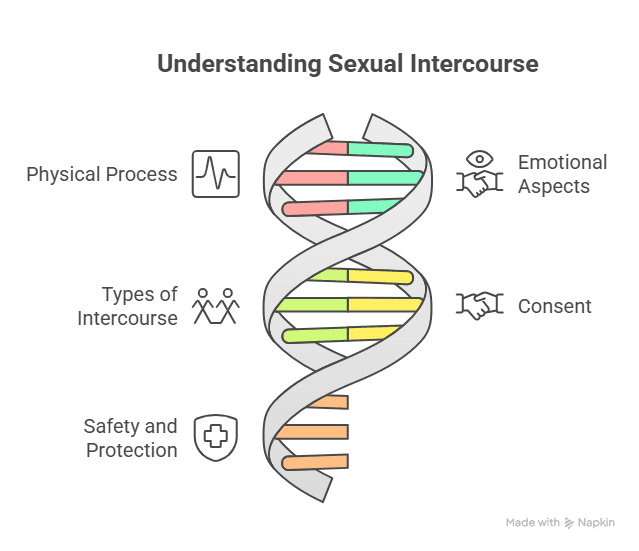
Understanding Sexual Intercourse
Common Myths About Sexual Intercourse
“Everyone Does It Early”
There is no correct age or timeline. People choose to engage in sexual activity at different stages of life.
“It’s Only About Physical Pleasure”
For many individuals, emotional connection and trust are equally important aspects.
“It Always Leads to Pregnancy”
Pregnancy is possible but not guaranteed. Proper use of contraception significantly reduces the risk.
Emotional Readiness
Emotional Readiness
Understanding Your Feelings
Being emotionally ready is just as important as physical readiness. Feeling comfortable, safe, and confident is key.
Communication With Your Partner
Discussing boundaries, expectations, and comfort levels ensures a more positive experience.
When to Seek Guidance
Questions or Concerns
If you have questions about sexual health, speaking with a healthcare professional can provide reliable information.
Health Issues
Pain, discomfort, or unusual symptoms should be discussed with a medical professional.
Final Thoughts
Understanding what is sexual intercourse is an important part of sexual education. It involves more than just physical activity—it includes emotional connection, communication, consent, and responsibility.
Being informed helps you make safe, respectful, and confident decisions in your personal life.