Your subscription could not be saved. Please try again.
Your subscription has been successful.
Abusive Relationship: Eye-Opening Signs, Dangers, and How to Break Free
An abusive relationship isn’t always obvious. It can begin subtly and escalate over time, leaving the victim feeling trapped, confused, or even to blame. Whether emotional, physical, verbal, or psychological, abuse can happen to anyone—regardless of gender, age, or background. Understanding the truth about abusive relationships is the first powerful step toward healing and reclaiming control.
An abusive relationship is any partnership in which one person uses manipulation, control, or harm to gain power over the other. Abuse is not just physical—it can be emotional, financial, sexual, or psychological. At its core, it’s about control and fear, not love and respect.
Who Can Be Affected?
Anyone. Abuse knows no boundaries. Women, men, non-binary individuals, and people in same-sex or opposite-sex relationships can all be victims. Abuse can happen in marriages, dating relationships, cohabiting couples, or even in long-distance setups.
Types of Abuse
Types of Abuse
Emotional and Psychological Abuse
This is one of the most common forms. It includes manipulation, constant criticism, gaslighting, shaming, and isolating the partner from friends or family. The goal is to undermine the victim’s confidence and independence.
Physical Abuse
This involves physical harm like hitting, slapping, choking, pushing, or any other form of violence. It often escalates over time and can be life-threatening.
Verbal Abuse
Verbal attacks, yelling, name-calling, or degrading language are all forms of verbal abuse. Words can cause lasting emotional wounds even without physical harm.
Sexual Abuse
Sexual coercion, rape, or any unwanted sexual behavior falls under this category. It can also include using sex as a form of control or manipulation.
Financial Abuse
One partner may control all money, prevent the other from working, or monitor every purchase to maintain dominance and make the victim dependent.
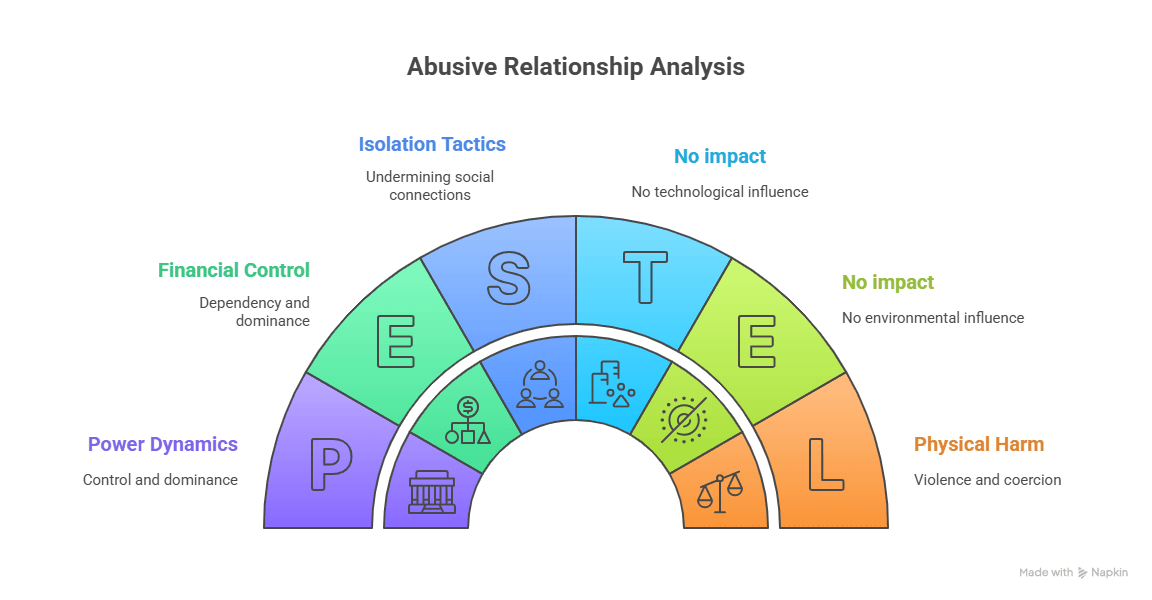
Abusive Relationship Analysis
Warning Signs of an Abusive Relationship
Early Red Flags
Extreme jealousy or possessiveness
Controlling behavior disguised as “concern”
Fast-moving relationship without emotional grounding
Behavioral Patterns
Blaming you for their problems
Isolating you from friends and family
Using guilt or fear to manipulate
Emotional Impact
If you feel constantly anxious, like you’re “walking on eggshells,” or afraid to express your true thoughts, these are strong indicators of abuse.
Why People Stay in Abusive Relationships
The Cycle of Abuse
Abuse often follows a predictable cycle: tension builds, an abusive incident occurs, followed by a honeymoon phase where the abuser apologizes or acts loving. This keeps the victim hopeful things will change.
Emotional Manipulation
Victims may be made to feel they deserve the abuse or that no one else would love them. This internalized shame can be incredibly hard to overcome.
Fear and Dependence
Some victims fear retaliation or have nowhere else to go. Others are financially dependent or fear losing their children, pets, or housing if they leave.
How to Get Out of an Abusive Relationship
Create a Safety Plan
Make copies of important documents, hide emergency money, and identify a trusted friend or shelter. Practice how you’ll leave safely.
Seek Support
Reach out to domestic violence hotlines, support groups, or counselors. You’re not alone, and there are people trained to help you.
Use Legal Protection
Restraining orders, police reports, and legal aid can provide safety and support when exiting a dangerous situation.
Healing After Abuse
Healing After Abuse
Give Yourself Time
Recovery takes time. Don’t rush yourself. Emotional wounds need patience and care, just like physical ones.
Therapy and Counseling
A trauma-informed therapist can help unpack the abuse, rebuild self-esteem, and process painful emotions in a safe space.
Reclaiming Identity
Many survivors lose their sense of self. Journaling, creative outlets, travel, or new hobbies can help you reconnect with who you are outside the relationship.
Helping Someone in an Abusive Relationship
Listen Without Judgment
Don’t push them to leave immediately. Offer support, remind them it’s not their fault, and encourage them to seek professional help when they’re ready.
Be a Safe Person
Sometimes, just knowing someone believes in them can be life-changing. Let them know you’re there, and that help is available.
Final Thoughts: The Courage to Break Free
Leaving an abusive relationship is an act of courage. It’s a reclaiming of your voice, your safety, and your future. Abuse thrives in silence—but the moment you reach out, you begin to take that power back. Whether you’re reading this for yourself or someone you care about, know that healing is possible—and support is always within reach.