Your subscription could not be saved. Please try again.
Your subscription has been successful.
Couples Therapy: Powerful Benefits That Can Save Your Relationship
Couples therapy is often misunderstood. Many people believe it’s only for relationships that are on the brink of collapse. In reality, couples therapy can strengthen communication, rebuild trust, and deepen emotional intimacy long before things reach a breaking point.
Whether you’re navigating constant arguments, recovering from betrayal, or simply feeling disconnected, couples therapy offers tools that can transform how you relate to one another.
Couples therapy is a structured form of counseling where partners work with a licensed therapist to address relationship concerns. The goal isn’t to “pick sides,” but to improve communication, resolve conflict, and help both individuals feel heard and understood.
It’s Not Just for Crisis Situations
Many couples seek therapy during a crisis, but couples therapy is also helpful for preventative care. Just like going to the gym keeps your body strong, relationship counseling helps maintain emotional health.
Common Reasons Couples Seek Therapy
Communication Problems
One of the top reasons couples pursue therapy is poor communication. Misunderstandings, defensiveness, or constant arguments can slowly erode connection. Couples therapy teaches structured communication skills that reduce conflict and increase understanding.
Trust Issues
Infidelity, secrecy, or broken promises can damage trust. Couples therapy provides a safe space to process hurt and begin rebuilding emotional security.
Emotional Distance
Over time, partners may feel more like roommates than lovers. Therapy helps reignite emotional closeness by exploring unmet needs and strengthening intimacy.
Life Transitions
Major changes—like having children, career shifts, relocation, or financial stress—can strain relationships. Couples therapy helps partners adapt and stay connected during these transitions.
How Couples Therapy Works
Assessment Phase
In the early sessions, the therapist gathers background information about the relationship, recurring issues, and individual perspectives.
Identifying Patterns
Many couples fall into negative cycles—such as one partner withdrawing while the other pursues. Couples therapy helps identify these patterns so they can be disrupted.
Learning New Skills
Therapists teach practical tools such as active listening, emotional validation, and conflict resolution strategies that couples can practice outside sessions.
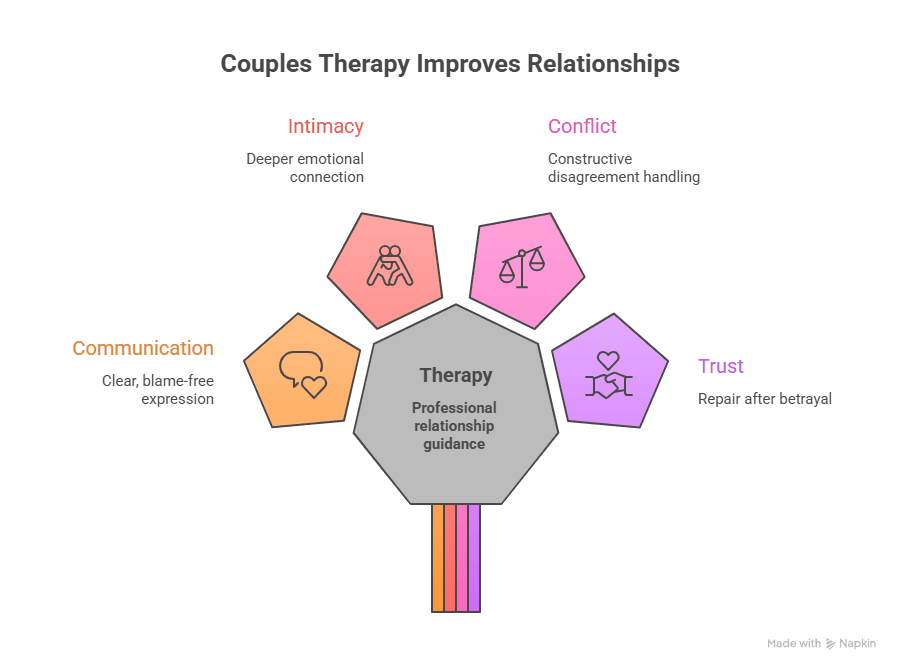
Couples Therapy Improves Relationships
The Benefits of Couples Therapy
Improved Communication
Couples therapy teaches partners how to express feelings clearly without blame or criticism. This reduces defensiveness and creates space for empathy.
Deeper Emotional Intimacy
When both partners feel heard and validated, emotional intimacy naturally increases. Therapy encourages vulnerability in a structured, supportive setting.
Conflict Resolution Skills
Disagreements are normal. Couples therapy doesn’t eliminate conflict—but it changes how conflict is handled.
Rebuilding Trust
With professional guidance, couples can repair trust after betrayal by addressing root causes and establishing transparency.
Does Couples Therapy Really Work?
Research-Based Approaches
Many forms of couples therapy, such as Emotionally Focused Therapy (EFT) and the Gottman Method, are backed by research showing measurable improvements in relationship satisfaction.
Commitment Matters
Success often depends on both partners being willing to participate honestly and consistently. Couples therapy is most effective when both individuals are open to growth.
What to Expect in a Couples Therapy Session
Safe, Neutral Environment
The therapist provides a balanced space where both partners can speak openly without interruption or judgment.
Structured Conversations
You may be guided through exercises that focus on listening, empathy, and understanding each other’s core needs.
Homework Assignments
Many therapists assign practical exercises to practice at home, reinforcing what’s learned during sessions.
When Couples Therapy May Not Be Enough
When Couples Therapy May Not Be Enough
Abuse or Safety Concerns
If there is active abuse, couples therapy may not be appropriate. Individual safety must come first.
Lack of Willingness
If one partner refuses to engage honestly, progress may be limited. Both parties must participate actively.
How to Know If You Need Couples Therapy
Frequent Arguments
If you argue about the same issues repeatedly without resolution, therapy can help break the cycle.
Feeling Unheard or Unseen
When emotional needs go unmet for extended periods, resentment builds. Couples therapy addresses these unmet needs directly.
Considering Separation
Before making permanent decisions, many couples choose therapy to explore whether reconciliation is possible.
How to Choose the Right Couples Therapist
Look for Credentials
Choose a licensed therapist trained specifically in couples therapy approaches.
Check Compatibility
Both partners should feel comfortable with the therapist. A good fit increases the likelihood of success.
Final Thoughts on Couples Therapy
Couples therapy is not a sign of failure—it’s a sign of commitment. Seeking help shows that both partners value the relationship enough to work on it intentionally.
Whether you’re trying to rebuild trust, improve communication, or simply reconnect emotionally, couples therapy provides practical tools and a structured environment for growth.
Strong relationships don’t happen by accident. They require effort, vulnerability, and sometimes professional guidance. Taking that step could be the turning point your relationship needs.