Your subscription could not be saved. Please try again.
Your subscription has been successful.
Forced Sex: Critical Facts Everyone Needs to Understand
The term forced sex refers to any sexual activity that occurs without clear, voluntary, and ongoing consent. It is a serious violation of a person’s rights, boundaries, and safety. Understanding what forced sex means, how it happens, and how to recognize it is essential for promoting healthy relationships and protecting individuals from harm.
This guide provides clear, factual information about forced sex, consent, legal implications, and how to support yourself or others in difficult situations.
Forced sex is any form of sexual activity that happens without consent. This includes situations involving physical force, threats, manipulation, pressure, or when someone is unable to give consent.
Consent must be freely given. If it is taken through fear, pressure, or coercion, it is not valid.
It Can Happen in Any Relationship
Forced sex is not limited to strangers. It can occur in dating relationships, marriages, or long-term partnerships. Being in a relationship does not give anyone the right to another person’s body.
Understanding Consent
What Real Consent Looks Like
Consent must be:
Freely given
Clear and enthusiastic
Ongoing (can be withdrawn at any time)
Given by someone capable of making that decision
If any of these elements are missing, the situation may involve forced sex.
When Consent Is Not Possible
Consent cannot be given if a person is:
Unconscious or asleep
Intoxicated or impaired
Under legal age
Threatened or pressured
Understanding and Addressing Forced Sex
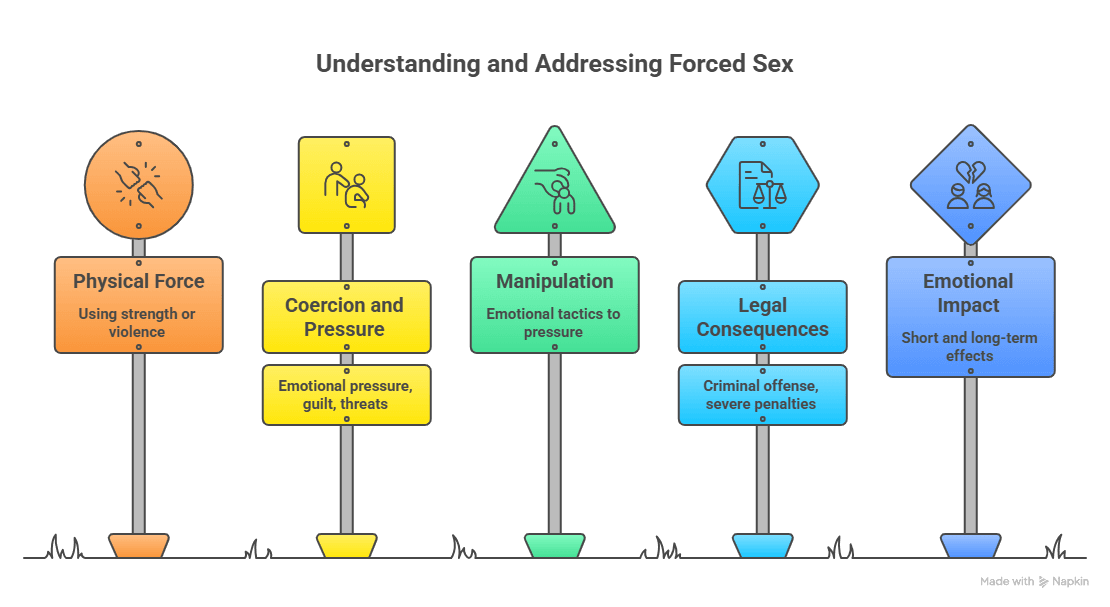
Forms of Forced Sex
Physical Force
This involves using physical strength or violence to engage in sexual activity without consent.
Coercion and Pressure
Forced sex does not always involve physical violence. Emotional pressure, guilt, threats, or manipulation can also be forms of coercion.
Manipulation
Some individuals may use emotional tactics—such as guilt or fear of losing the relationship—to pressure someone into sexual activity.
Legal Consequences of Forced Sex
It Is a Criminal Offense
Forced sex is considered a serious crime in most countries, often classified under sexual assault or rape laws.
Severe Penalties
Penalties can include imprisonment, fines, and long-term legal consequences depending on the severity of the offense and jurisdiction.
Emotional and Psychological Impact
Short-Term Effects
Victims of forced sex may experience shock, fear, confusion, or anxiety.
Long-Term Effects
Long-term impacts can include depression, trust issues, post-traumatic stress, and difficulty forming future relationships.
How to Recognize Warning Signs
Controlling Behavior
Partners who try to control decisions, isolate you, or ignore boundaries may be showing warning signs.
Pressure Around Intimacy
Feeling pressured, rushed, or obligated to engage in sexual activity is a red flag.
Ignoring “No”
Any situation where refusal is ignored or dismissed should be taken seriously.
What to Do If You Experience Forced Sex
Prioritize Your Safety
Ensure you are in a safe environment away from harm.
Seek Support
Talking to a trusted friend, family member, or professional can provide emotional support and guidance.
Consider Professional Help
Counselors, therapists, and support organizations can help you process the experience and begin healing.
How to Support Someone Else
How to Support Someone Else
Listen Without Judgment
Allow them to share their experience at their own pace without questioning or blaming.
Encourage Support
Suggest professional help or support services while respecting their choices.
Be Patient
Healing takes time. Offering consistent support can make a significant difference.
Preventing Forced Sex Through Awareness
Education on Consent
Understanding consent is one of the most effective ways to prevent harmful situations.
Respecting Boundaries
Healthy relationships are built on mutual respect and clear communication.
Final Thoughts
Forced sex is a serious violation of personal boundaries and human rights. Understanding consent, recognizing warning signs, and supporting those affected are essential steps in creating safer relationships and communities.
Education and awareness play a key role in prevention. Everyone deserves to feel safe, respected, and in control of their own body.