Your subscription could not be saved. Please try again.
Your subscription has been successful.
Is Anal Harmful? Debunking the Myths with Facts and Safety Tips
With rising sexual openness and curiosity, questions around anal sex have become more common—but so have the myths. One of the most frequently asked concerns is: Is anal harmful? While the topic is often treated with discomfort or stigma, it’s important to approach it with facts, not fear.
In this guide, we’ll break down the medical, physical, and emotional realities of anal sex. You’ll learn what makes it safe, what risks exist, and how to avoid common mistakes that could turn a pleasurable experience into a harmful one.
The anus is not the same as the vagina. It’s more sensitive, contains thousands of nerve endings, and is not naturally lubricated. That means it requires more care and attention to avoid discomfort or injury during penetration.
The Role of the Anal Sphincter
This muscle controls the opening and closing of the anus. It’s not designed for penetration, but with preparation and patience, it can relax and allow for comfortable anal sex. Forcing anything past a tight sphincter, however, can lead to tearing or strain.
Is Anal Harmful to Your Health?
Is Anal Harmful to Your Health?
Risks of Tissue Damage
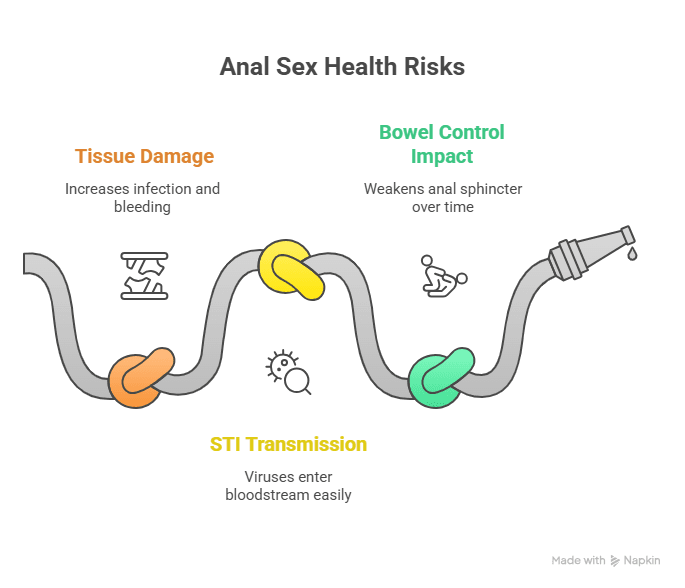
The rectal lining is thinner and more prone to tearing than vaginal tissue. Without sufficient lubrication or preparation, anal sex can cause microtears. These tears increase the risk of infection and bleeding.
Unprotected anal sex has a higher risk of transmitting sexually transmitted infections, including HIV, gonorrhea, and chlamydia. The rectum’s delicate lining allows viruses to enter the bloodstream more easily.
To reduce this risk, always use condoms and consider regular STI testing as part of your sexual wellness routine.
Anal Sex Health Risks
Impact on Bowel Control
There is concern that frequent or forceful anal sex might weaken the anal sphincter over time, possibly affecting bowel control. However, this tends to occur only with repeated trauma, lack of lubrication, or ignoring signs of discomfort. Practiced safely, anal sex is unlikely to cause long-term damage.
Making Anal Sex Safer
Use Plenty of Lubrication
Since the anus doesn’t self-lubricate, applying a generous amount of high-quality lubricant is essential. Silicone-based lubricants last longer, while water-based lubes are compatible with condoms and toys. Avoid oil-based lubes with latex condoms—they can cause breakage.
Go Slow and Communicate
Rushing anal sex increases the risk of pain and injury. Start with a finger or small toy, allow the body to adjust, and communicate constantly with your partner. If there’s any pain, stop immediately.
Condom Use and Hygiene
Condoms protect both partners from bacteria and STIs. Also, never go from anal to vaginal sex without changing condoms, as this can transfer harmful bacteria. Cleaning the area gently before anal sex helps make the experience more hygienic and comfortable.
Is Anal Harmful for Women?
There’s no difference in anatomy between women and men when it comes to the anus. However, some women worry about long-term health effects, especially if they’re trying it for the first time or feel pressured into it.
As long as it’s consensual and done safely, anal sex is not inherently harmful for women. In fact, many women report that anal play can be pleasurable when approached with trust and patience.
Mental and Emotional Aspects
Consent and Comfort
No sexual activity should ever be pursued without enthusiastic consent. Anal sex can be enjoyable for many, but only when both partners are mentally and emotionally ready.
Breaking the Stigma
There’s still a lot of shame surrounding anal sex. Some associate it with taboo, pain, or a loss of masculinity/femininity. In reality, sexuality is personal, and there’s nothing inherently wrong—or harmful—about exploring what brings pleasure when it’s consensual and safe.
Common Myths About Anal Harm
Common Myths About Anal Harm
Myth: Anal Sex Always Hurts
Fact: Pain usually occurs due to lack of preparation. With lube, communication, and patience, anal sex can be painless and even pleasurable.
Myth: Anal Sex Will Ruin the Sphincter
Fact: Occasional, gentle anal sex does not stretch the anus permanently. Problems only arise with frequent, rough penetration without care.
Myth: Only Certain People Like Anal
Fact: People of all genders and sexual orientations may enjoy anal play. It’s about personal preference, not identity.
When to See a Doctor
If you experience bleeding, severe pain, or any signs of infection after anal sex, don’t wait—consult a healthcare professional. Minor discomfort can happen, but persistent issues could point to something more serious that requires treatment.
So, Is Anal Harmful? Here’s the Real Answer
Done right, anal sex is not harmful. The keyword is safety. With proper lubrication, slow and respectful technique, and clear communication, anal sex can be a healthy and enjoyable part of your sex life. The biggest risks come from rushing, ignoring discomfort, or avoiding protection.
If you or your partner are curious, don’t let myths or fear stop you. Educate yourself, move at a comfortable pace, and focus on mutual pleasure. The more you understand, the more empowered your experience will be.