Your subscription could not be saved. Please try again.
Your subscription has been successful.
Pansexual Meaning: What It Really Means to Be Pansexual
In today’s evolving conversation around gender and sexuality, the term pansexualhas gained more visibility and relevance. But what exactly is the pansexual meaning? How does it differ from other sexual orientations, and what should you know if you’re questioning whether the label fits you or someone you love? This comprehensive guide breaks it down clearly and thoughtfully.
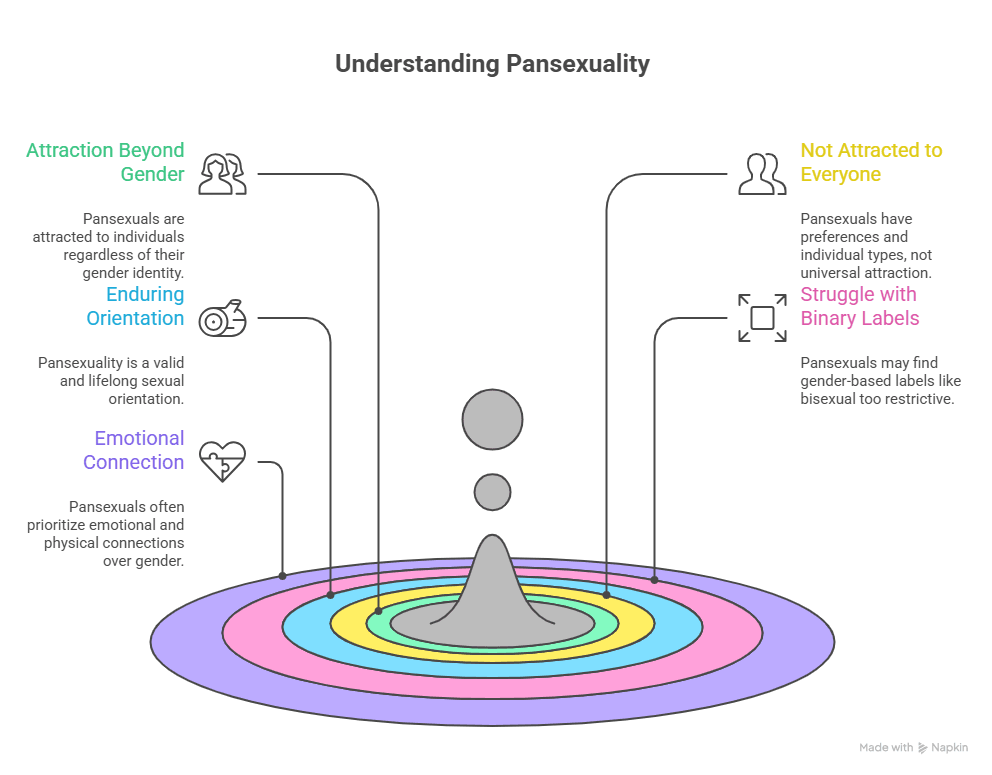
Pansexuality is a sexual orientation characterized by attraction to people regardless of their gender identity or biological sex. The term comes from the Greek prefix “pan,” meaning “all” or “every.” In simple terms, pansexual people are attracted to individuals based on who they are—not based on whether they are male, female, nonbinary, or another gender.
While bisexuality typically refers to attraction to more than one gender (usually male and female), pansexuality explicitly includes attraction to all gender identities. Some pansexual individuals feel their orientation is broader and more inclusive, but it’s important to remember that people use different labels based on personal comfort and cultural context.
What Being Pansexual Looks Like in Real Life
Emotional and Physical Attraction
For pansexual people, emotional and physical connections aren’t determined by gender. A pansexual person may fall in love with someone who is cisgender, transgender, nonbinary, or genderqueer without that being a factor in their attraction.
It’s About the Person, Not the Label
The key part of the pansexual meaning is that it’s focused on the person—their personality, energy, values—not on their gender category. Gender is simply not a limiting factor in who they are drawn to.
Common Myths About Pansexuality
“Pansexuals Are Attracted to Everyone”
This is a common misunderstanding. Being pansexual doesn’t mean you’re attracted to every single person you meet. Just like anyone else, pansexual people have preferences and individual types—they’re just not restricted by gender.
“Pansexuality Is Just a Phase”
This harmful myth has been used against many sexual identities. Pansexuality is a valid, enduring orientation that many people identify with for their entire lives.
Understanding Pansexuality
Signs You Might Be Pansexual
You’re Attracted to People Regardless of Gender
If your past or current attractions have included people across the gender spectrum—and gender wasn’t the deciding factor—you might relate to the pansexual label.
You Struggle to Relate to Gender-Based Labels
If bisexual doesn’t quite feel like the right fit because it feels too binary, pansexual might better reflect how you experience attraction.
If you’ve ever felt, “I fall for the person, not the gender,” this might be your truth. Many pansexual individuals describe their attractions in similar terms.
Pansexual Representation and Community
Visibility Is Growing
More celebrities, influencers, and public figures are openly identifying as pansexual, helping to normalize the orientation and foster greater understanding.
Pride and the Pansexual Flag
The pansexual pride flag features three colors: pink (representing attraction to women), yellow (nonbinary or gender non-conforming people), and blue (attraction to men). It’s a symbol of pride and inclusivity within the LGBTQ+ community.
Respect and Understanding
Respect and Understanding
Pansexual People Face Misunderstanding
Because the term is still misunderstood, pansexual individuals may face skepticism—even within LGBTQ+ spaces. Listening, validating, and respecting someone’s chosen identity goes a long way in supporting them.
Language Matters
It’s important to use inclusive language and be open-minded when talking about orientation. You don’t need to fully understand someone’s label to show them kindness and respect.
Final Thoughts: Embracing Pansexual Identity
The pansexual meaning is simple at its core: being attracted to people regardless of their gender. Whether you’re pansexual, questioning, or simply curious, know that all identities on the spectrum deserve understanding and visibility. Labels should help you feel empowered—not limited.